Does the Stake Mines hack using AI pattern recognition actually work?
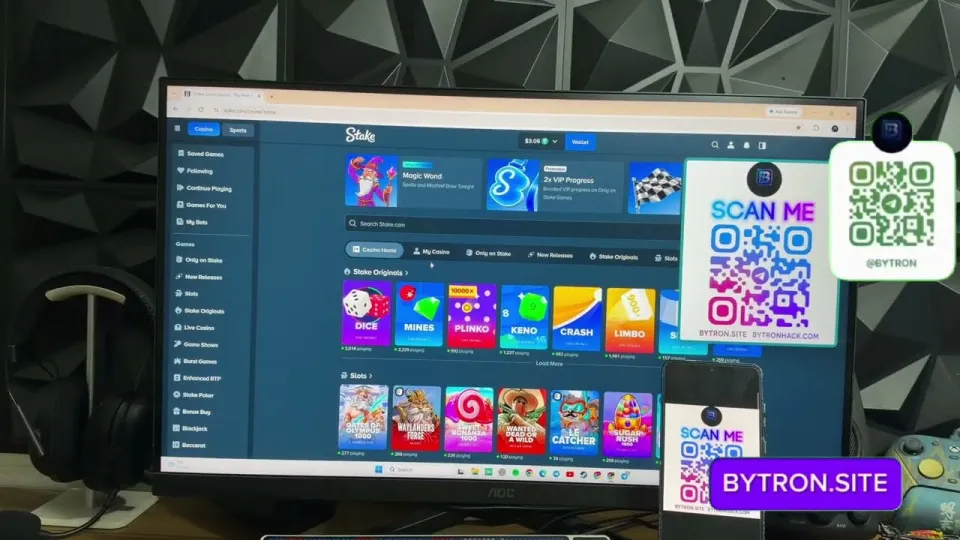
Video: How I Won Using This Stake Mines Hack (AI Version)
· based on the channel Zaku Zaku
A Stake Mines hack that uses AI pattern recognition does not reveal where the mines are; it gives you a repeatable way to read the board, size your bets and decide when to stop. The method shown in Zaku Zaku's breakdown is a decision framework wrapped around a random game, not a leak in Stake's provably fair system. Treat it as a discipline tool and it can help; treat it as a predictor and it will cost you money.
What the Stake Mines hack actually does
The hack in question is a pattern-recognition overlay: it looks at the tiles you have already revealed and marks clusters and zones it labels high-risk, then you decide whether to keep picking or cash out. Nothing in that process touches Stake's server-side mine placement. Mines is a provably fair game, meaning the mine positions are fixed by a seed before your first click, and the site publishes a hash you can verify afterwards. Any tool that claims to know the next safe tile is either guessing or selling you something.
What the AI layer genuinely adds is structure. Instead of clicking on instinct, you get a visual read of the board: which areas you have already cleared, which rows and columns look crowded with your own picks, and how deep into the grid you are relative to your target multiplier. The video's author describes the focus as reading tile clusters, spotting high-risk zones early and deciding when to stop, which is a fair description of what such a tool can do.
How to use the method step by step
The workflow is simple enough to repeat in every session, and the repetition is the point.
- Set the mine count before the round. Fewer mines mean smaller multipliers per pick and a gentler variance; more mines mean faster swings. Pick one setting and keep it for the whole session so your results are comparable.
- Fix the bet size. A flat stake, or a fixed percentage of a bankroll you have already separated from the rest of your funds, removes the temptation to chase.
- Decide the exit before the first click. Choose a target multiplier or a number of picks, and cash out when you reach it, regardless of how the board looks.
- Read the board as you go. Use the highlighted clusters as a prompt to slow down, not as a signal that a tile is safe. If the tool flags a zone, that is a moment to consider cashing out rather than a reason to click elsewhere.
- Log the round. Record mines, picks, multiplier and result. After 50 to 100 rounds you have data instead of impressions.
Zaku Zaku's video walks through exactly these decision points on a live board across multiple rounds, including board setup and exit timing, and offers supporting session notes as a download in the description. The notes are the part worth keeping: a simple spreadsheet with the same five columns does the same job.
Why the AI label deserves skepticism
AI pattern recognition on a Mines board has no predictive power, because each reveal is an independent draw from a fixed set of remaining tiles. If you have 25 tiles and 3 mines, your chance of a safe pick on the first click is 22/25, or 88%. After ten safe picks the numbers shift with every reveal, but they shift according to simple combinatorics, not according to a pattern the software can learn. A tool that highlights "hot" clusters is describing what you have already revealed, not what is hidden.
The word hack does a lot of marketing work here. In practice these tools are dashboards: they track your picks, show the multiplier curve and nudge you toward an exit. That is useful, but it is not an exploit. Anyone selling a Stake Mines predictor, a script that forces a win or a "signal" service is selling something that cannot exist on a provably fair platform. If a product promises a fixed win rate, that is the clearest sign to walk away.
Bankroll rules that decide the outcome
Because the underlying game is random, the only variables you control are bet size, mine count and when you stop, and those three decide whether a session ends in profit or in a wiped balance. A workable structure looks like this: a session bankroll you can lose without changing your month, a flat bet of 1% to 2% of it, a target of roughly 1.5x to 2x per round with a low mine count, and a hard stop at either a 20% session gain or a 30% loss. The house edge on Stake Mines sits around 1% per bet at standard settings, so a long session with large bets grinds that edge against you quickly.
Exit timing matters more than entry. The video's emphasis on deciding when to stop is the most honest part of the whole approach: most losing sessions on Mines come from one extra click after a good multiplier, not from a bad first pick. Set the cash-out button as the default action and make continuing the deliberate choice.
Reading clusters without fooling yourself
Cluster reading is a visualization habit, and it is easy to mistake for insight. Two rules keep it honest. First, treat any highlighted zone as information about your own history on the board, not about the mines; if you have cleared the left side, the remaining risk is spread evenly across what is left. Second, cap your picks. With 3 mines on a 25-tile board, going beyond 8 to 10 safe picks pushes the multiplier into territory where a single loss erases many wins. The math is unforgiving: at 10 picks the payout is attractive, but the probability of surviving that far is well under half.
A practical compromise is to use the overlay as a pause button. When the tool marks a high-risk cluster, cash out and start a fresh round rather than hunting for a safer tile. You keep the discipline benefit and drop the false belief that the software sees something you cannot.
What the Zaku Zaku breakdown is worth watching for
The video is useful as a demonstration of process rather than proof of a system: it shows board setup, the moment-to-moment calls and the exit decisions across several rounds. Watch it for the rhythm of a disciplined session, the way bet sizes stay flat and the way rounds end on a plan rather than a feeling. Do not watch it expecting a formula that turns the game deterministic, because no such formula exists on a provably fair platform. Zaku Zaku presents the method as a practical application, and that framing is the right one.
The bottom line on the Stake Mines hack
The Stake Mines hack built on AI pattern recognition is a session-management tool, not a way to beat the game. It can help you read the board, keep bets flat and cash out on plan, and those habits are worth more than any predictor. The mines are placed before your first click and verified by a published hash, so no software can see them. Use the method as a checklist, log your rounds, and set your stop before you start. For a full walkthrough of the decision points, see Zaku Zaku's breakdown of the approach.
Key takeaways
- The AI Stake Mines hack reads clusters of revealed tiles and marks zones the tool calls high-risk instead of predicting individual mine positions.
- Stake Mines runs on a provably fair system, so no hack, script or predictor can know where the mines sit before a round starts.
- The method's real content is bankroll and exit discipline: fixed bet sizes, a set number of picks per round and a stop point decided before the first click.
- Zaku Zaku's breakdown shows the decision points on the board across multiple rounds rather than promising a fixed win rate.
- Session tracking notes are offered as a download in the video description, and they matter more than the tool itself.
Questions & answers
Can a Stake Mines hack really predict where the mines are?
No. Stake Mines is provably fair: mine positions are fixed by a seed before the round and can be verified afterwards with the published hash. A predictor would have to break that system, which no overlay or script can do. Tools labelled as hacks track your picks and multipliers, not the hidden mines.
What mine count should I use with this method?
Pick one setting and keep it for the whole session so results stay comparable. A low mine count such as 1 to 3 gives smaller multipliers and gentler swings, which suits flat betting and a fixed exit target. Higher counts increase variance sharply and make a single loss much harder to recover.
How many picks should I make before cashing out?
For most players, 5 to 10 safe picks is a sensible ceiling on a 25-tile board with a low mine count. Beyond that the multiplier looks attractive but the chance of surviving another click drops fast, and one loss wipes out many small wins. Decide the number before the first click.
Is the AI pattern recognition in the video a scam?
It is better described as marketing than as fraud: the tool visualizes clusters you have already revealed rather than predicting anything. The useful part is the discipline it encourages, flat bets and planned exits. Be cautious with anyone selling a guaranteed win rate or a paid signal service for Stake Mines.
Source: How I Won Using This Stake Mines Hack (AI Version) · Markdown version